Does Insurance Cover Emergency Roof Repair After a Storm?
By Editorial Team, Content Writer · November 21, 2026 · 11 min read
Last Updated: November 21, 2026
Quick Summary
In most cases, insurance covers emergency roof repair after a storm, but only if you act quickly, prevent further damage, and document the loss. Photograph the damage, notify your carrier promptly, and keep receipts for tarps and temporary work.
- Notify your carrier promptly, since most policies require prompt notice and late reporting can reduce coverage.
- Photograph and video damage from the ground and attic before touching anything.
- Place tarps or board up openings, because mitigation is the step most policies expect.
- Do not make permanent repairs before the adjuster inspects the damage.
- Compare the deductible and ACV versus replacement cost payout before filing.
Table of Contents
- First 72 Hours: A Timed Checklist After a Storm Damages Your Roof
- Emergency Roof Tarping and Mitigation: What Your Policy Expects
- Roof Insurance Claim Documentation: Photos, Receipts, and Records
- Filing the Claim: Deadlines, Deductibles, and Coverage Limits
- Reviewing the Roof Damage Insurance Adjuster Estimate
- Roofing Insurance Supplement: Adding Missed Line Items
- Scams to Avoid and Your Next Step on the Repair
- Frequently Asked Questions
First 72 Hours: A Timed Checklist After a Storm Damages Your Roof
Does insurance cover emergency roof repair after a storm? In most cases, yes, but only if you act quickly and document the damage properly. Your policy usually requires you to prevent further damage, which means fast action matters. The sequence below is built around two things adjusters consistently look for: that you protected the property, and that you can prove what the storm did versus what was already worn.
Hour 0-2: Secure people and power. Check for injuries and keep everyone off the roof. If water is reaching electrical fixtures, outlets, or the panel, shut off power at the breaker only if you can do so without standing in water; otherwise call an electrician. Move furniture, electronics, and rugs away from active leaks and put buckets under drips. Do not climb onto a wet, wind-damaged roof to inspect it, falls, not the storm, are the most common injury in the first hours.
Hour 2-6: Document before you touch anything. Photograph and video the damage from the ground and from inside the attic and ceilings. Capture wide shots that show the room or roof plane, then close-ups of missing shingles, granule loss, dents in gutters and vents, cracked flashing, and water stains. Note the date and time the storm hit and keep a written log of what you saw when. This is also the right window to call your carrier's claims line and open the claim, most policies require prompt notice, and the claim number starts the clock on the insurer's obligations. With the claim number in hand, keep your photos and timeline together as you file roof storm claims, so the record you began now can support each step that follows.
Hour 6-24: Stop the water. Place tarps or temporary cover over exposed areas, and board up broken windows or openings if needed. A tarp is mitigation, not repair, and it is the step most policies expect. Keep every receipt for tarps, lumber, plastic sheeting, and emergency labor, and photograph the tarp in place with the date visible. If you hire someone for this, confirm they are licensed and insured before they go up.
Hour 24-72: Get written scope, not verbal promises. Request written estimates from at least two or three licensed roofing contractors, and confirm license and liability insurance before signing anything. Ask each contractor to itemize labor, materials, and code-related items rather than quoting a single lump sum. Do not authorize permanent repairs before the adjuster has inspected, unless a tarp or board-up is the only way to prevent further damage, and if you must act, document why.
Watch out: many homeowners wait days before calling their carrier, and a delayed notice can shrink or complicate a claim even when the damage is clearly covered. Starting the claim early keeps your options open and gives the adjuster a clean timeline to work from.
A practical recordkeeping habit that supports reimbursement later: keep a single folder, physical or digital, for dated photos, receipts, the claim number, the adjuster's name and contact information, and a running log of every call and email. That folder becomes the backbone of your claim if the estimate is disputed or a supplement is needed.
The timeline below sums up the key steps and windows the article recommends after storm damage.
| Window | Step | Why it matters |
|---|---|---|
| Hour 0-2 | Check for injuries and keep people off the roof | Falls are the most common injury early on |
| Hour 2-6 | Photograph and video damage, then call the carrier | Prompt notice starts the insurer's obligations |
| Hour 6-24 | Place tarps or board up openings | Mitigation is the step most policies expect |
| Hour 24-72 | Get written, itemized estimates from licensed contractors | Verbal promises do not protect the homeowner |
Emergency Roof Tarping and Mitigation: What Your Policy Expects
Most policies require reasonable steps to limit further damage. This is called mitigation, and it is usually a requirement, not an option.
Tarping is the most common temporary fix. A contractor can secure a tarp over damaged shingles or openings to keep rain out until permanent repairs begin. Keep every receipt for these costs. Your carrier may reimburse reasonable emergency repair expenses.
Be careful not to make permanent repairs before the adjuster inspects the damage. Permanent work done too early can complicate your claim.
Roof Insurance Claim Documentation: Photos, Receipts, and Records
Good documentation is the foundation of any claim. Start with clear photos taken from the ground and, if it is safe, from a ladder or drone.
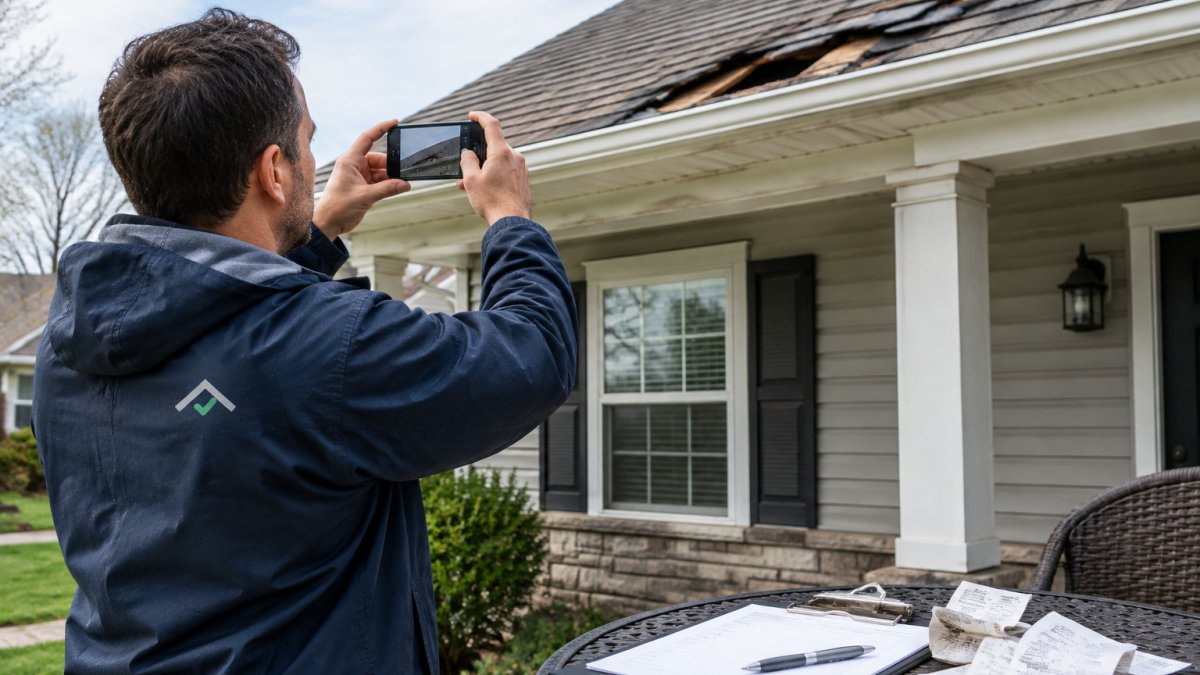
A homeowner photographing storm-damaged shingles from the ground with a smartphone, with receipts and a clipboard on a nearby porch table.
Keep these records together:
- Dated photos and videos of all visible damage
- Receipts for tarps, board-up materials, and emergency labor
- Written notes on when the storm hit and what you saw
- Copies of all emails and call logs with your carrier
According to National Association of Insurance Commissioners consumer guide on homeowners claims, keeping detailed records speeds up the claim process considerably.
Filing the Claim: Deadlines, Deductibles, and Coverage Limits
Every policy sets a deadline for reporting storm damage, and the deadline is usually shorter than homeowners expect. To confirm which wind damage roof insurance claim requirements apply to your policy, review the documents and deadlines before you file. Check your declarations page and the notice-of-loss language right away. Missing the notice deadline can reduce or eliminate coverage, and some carriers treat a delay in mitigation as a separate problem even when the loss itself is covered. When you call, get the claim number and the name of the assigned adjuster in writing.
How the deductible actually works. Your deductible is the amount you pay before insurance applies. Many homeowners policies use a separate wind or hail deductible, and it is often a percentage of your dwelling coverage rather than a flat dollar figure. Confirm the deductible type and amount on your policy before you authorize repairs, since it determines whether a claim is worth filing.
ACV versus replacement cost. Coverage limits also matter, and the payout method matters as much as the limit. Actual cash value (ACV) pays the depreciated value of the roof, what it was worth just before the storm, while replacement cost value (RCV) pays what it costs to replace with new materials of like kind and quality. On an older roof, the gap can be large: an ACV settlement may cover only a fraction of the replacement bid, and the homeowner covers the difference out of pocket. See how roof replacement insurance coverage limits shape the actual check you receive. Many RCV policies pay ACV first and release the recoverable depreciation after the work is completed and invoiced, which means you may need to front part of the cost and document completion to collect the rest.
What to confirm on the declarations page. Look for the dwelling coverage limit, the deductible type and amount, whether the roof is scheduled or excluded, and any endorsement that changes how the roof is valued. If your roof is an older one, ask the carrier in writing how depreciation will be applied before you sign a contractor's contract.
Coverage limits and code upgrades. Standard policies may cap or exclude costs to bring a repair up to current building code. Ask whether your policy includes any ordinance-or-law or code-upgrade coverage, and if not, plan for those costs in the repair budget.
Watch out: a common pattern is a homeowner who files on a small leak, pays a percentage wind/hail deductible, and then discovers the payout is less than the deductible plus the depreciation, leaving them worse off than if they had paid for the repair directly. Run the math on the deductible and the ACV/RCV difference before you file, and ask the adjuster to walk you through the calculation in writing.
Reviewing the Roof Damage Insurance Adjuster Estimate
The adjuster's estimate is the insurer's first official valuation of your loss. Read it line by line instead of accepting the total at face value.
Compare each item against what you observed. Look for missing shingles, damaged flashing, or interior water damage that the estimate does not mention.
If something looks wrong, ask the adjuster to explain the scope in writing. Many disputes are resolved simply by asking for a reinspection. If your supplement is pushed back, see how to respond to a denied or partially approved supplement.
Roofing Insurance Supplement: Adding Missed Line Items
A supplement is a request to add items that were left out of the original estimate. Common missed items include drip edge, starter strips, steep-slope charges, and permit fees.
Roofing software can help contractors check adjuster estimates against measurement reports and manufacturer requirements, and some tools draft supplement requests and adjuster replies for review before sending.
Supplements work best when each added item includes a reason, a photo, and a code or manufacturer reference where applicable.
Scams to Avoid and Your Next Step on the Repair
Storm seasons attract unlicensed contractors who pressure homeowners into signing quickly. Be cautious of anyone who asks for full payment upfront, offers to waive your deductible, or pushes you to sign a contract on the spot.
Before hiring a roofer, confirm their license and proof of liability insurance. Our guide on finding a roofer after storm damage walks through each vetting step, from licenses and insurance to red flags and estimate comparison. Get at least three written estimates and compare them line by line.
Your next step is simple: call your insurance carrier to open or confirm your claim, then gather your documentation. Once you have that in place, you can compare roofing contractors with confidence.
Frequently Asked Questions
Does home insurance cover roof damage from a storm?
Coverage varies by policy, but many standard homeowners policies address sudden storm damage and may exclude wear and tear, gradual leaks and lack of maintenance. Coverage depends on your specific policy, its named perils and your deductible. Report the storm damage promptly, document it thoroughly, and ask your carrier to explain in writing which parts of the roof repair are covered and which are excluded before you agree to any repair scope.
Can I make temporary roof repairs before the insurance adjuster inspects the damage?
Yes. Most policies require you to protect the property from further damage, which typically means emergency tarping or board-up work. Take photos of the damage before any temporary work, keep every receipt for materials and labor, and avoid permanent repairs until the adjuster has inspected. Insurers generally reimburse reasonable mitigation costs, but they may not cover tarping that was done carelessly or delayed while water damage worsened.
What receipts should I keep for emergency roof repairs?
Keep itemized invoices for tarps, plywood, fasteners, labor, equipment rental and any temporary housing or storage costs. Save proof of payment, the contractor's name, license number and address, and dated photos showing the work in progress. Organize receipts in one folder or digital file so you can submit them with your claim. Missing documentation is one of the most common reasons mitigation costs are reduced or denied.
What should I do if the insurance estimate leaves out necessary roof repairs?
Compare the adjuster's estimate line by line against your contractor's scope and the photos you took. Note missing items such as drip edge, underlayment, flashing or decking, and ask the adjuster in writing to revise the estimate with reasons. If the dispute continues, request a reinspection, submit a supplement with supporting documentation and manufacturer or code requirements, and consider your policy's appraisal clause or your state department of insurance consumer resources.

- emergency roof repair
- emergency roof repair after storm insurance
- emergency roof tarping insurance
- roof insurance claim documentation
- roof damage insurance adjuster estimate