Wind Damage Roof Insurance Claim Requirements Explained
By Editorial Team, Content Writer · November 17, 2026 · 9 min read

Last Updated: November 17, 2026
Quick Summary
Wind damage roof insurance claim requirements generally include proof that wind is a covered peril, that the damage happened during your policy period, and that no exclusion applies. Clean, recent breaks in shingles or flashing, documented with dated photos, are the strongest evidence. Report the claim promptly to avoid losing coverage.
- Confirm wind or windstorm is listed as a covered peril on your declarations page.
- Look for clean, recent breaks with bright exposed asphalt or nail heads, rather than weathered edges.
- Take wide and close-up photos of each roof slope and damaged area right after the storm.
- Report the claim as soon as you know about the damage and keep proof of notice.
- Compare your contractor's estimate with the adjuster's line by line and request written reasons for any excluded items.
Table of Contents
Wind damage roof insurance claim requirements often start with missing or lifted shingles after a storm. For many homeowners, the first sign is a shingle in the yard or a leak after heavy rain. Knowing what to look for helps you document wind damage correctly. Once you have documented the missing or lifted shingles, keeping the evidence organized can help as you move through the claim process with Fadaie Insurance Services, Inc.
Wind damage usually shows in a few clear ways:
- Missing shingles: Entire tabs or whole shingles gone, often leaving exposed underlayment
- Lifted or creased shingles: Tabs bent up, folded, or sealed out of line
- Torn or displaced flashing: Metal pieces around vents, chimneys, and valleys pulled loose
- Damaged ridge caps: Ridge pieces cracked, shifted, or blown off
- Debris impact: Dents, cracks, or punctures from branches or other storm debris
Look for patterns.
Watch for these signs after a storm:
- Shingle granules collected in gutters or downspouts
- Creased tabs that stay bent when you lift them
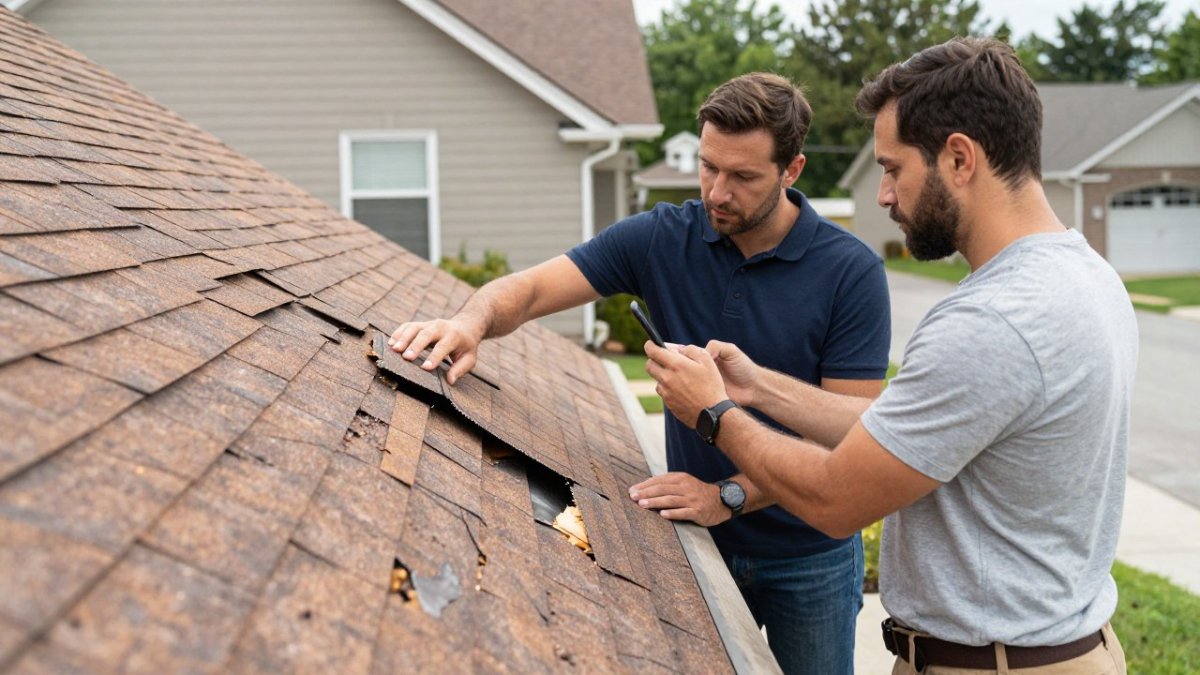
- Fresh, clean breaks with bright exposed asphalt or nail heads
- Interior water stains or ceiling drips directly below the affected area
Clean, recent breaks are the strongest evidence for wind damage roof insurance claim requirements. Old, weathered edges with dirt or algae growth usually point to age rather than a recent storm.
Does Homeowners Insurance Cover Wind Damage to a Roof?
Standard homeowners insurance policies commonly address sudden wind damage to the dwelling. The policy language and exclusions decide the final answer, so read your own policy carefully.
Coverage typically depends on three things: whether wind is a covered peril, whether the damage happened during the policy period, and whether any exclusion applies. Many policies also treat certain coastal or named-storm wind events differently.
Reviewing Coverage, Exclusions, and Deductibles
Start with your declarations page. It lists your dwelling limit, your deductibles, and any endorsements that change how wind is handled.
Check these items in your policy:
- Covered perils: Confirm wind and windstorm are listed as covered causes of loss
- Exclusions: Look for language about wear and tear, deterioration, or faulty workmanship
- Deductibles: Note whether you have a flat dollar deductible or a percentage deductible for wind
- Roof endorsements: Some policies limit payment for roofs on a settlement or cosmetic basis
Wind Deductibles and Named-Storm Deductibles by State
Wind and named-storm deductibles vary widely by state and by insurer. Some states require or allow percentage-based wind deductibles. Check your declarations page to see how your deductible is calculated.
Check with your state insurance department or your insurer for the rules that apply to your property. Confirm current details before you rely on them.
Separating Wind Damage From Wear, Deterioration, and Installation Defects
Insurers often distinguish sudden wind damage from gradual wear. Wear shows up as granule loss, cracking, curling, and widespread aging across the entire roof. Wind damage tends to show up as specific, recent breaks in specific areas.
Installation defects are a separate category. Nails placed too high, improper sealing strips, or missing underlayment can cause shingles to lift without any storm. Insurers may deny those losses, so an accurate read of the cause matters.
- Wind damage: Clean, recent breaks; damage concentrated on exposed edges
- Wear: Uniform aging, granule loss, brittleness across the roof
- Installation defects: Repeated failures in the same pattern, nails or sealing issues
A roofer or inspector can help you tell these apart. Photos taken right after the storm carry the most weight.
How to Document Roof Storm Damage for Insurance
Good documentation makes a claim much easier to support. Start documenting as soon as it is safe to do so.
Take photos from the ground and, where safe, from a ladder or with a drone. Capture wide shots of each slope, close-ups of each damaged area, and shots of any interior damage. Include a dated record of the storm and any weather reports for the area.
Evidence Checklist and Claim-File Template
Use this checklist to organize your claim file:
- Date and time of the storm event
- Weather records or reports for your address
- Wide photos of each roof slope
- Close-up photos of each damaged area
- Interior photos of ceilings and walls with water stains
- Photos of damaged gutters, siding, fences, or outbuildings
- Copy of your policy and declarations page
- Notice of loss and claim number from your insurer
- Repair estimates from licensed roofing contractors
- Receipts for temporary repairs and emergency work
- Log of every call, email, and inspection date
Keep originals of all photos and records. Store copies in a cloud folder so nothing gets lost.
Filing Deadlines, Notice Requirements, and the Roofing Supplement Process for Wind Claims
Most policies require prompt notice of loss. Report the claim as soon as you know about the damage, and keep proof that you reported it.
Filing deadlines differ by state and by policy. Check your policy and your state rules now, not after a storm.
A roofing supplement can come into play after the initial estimate. A supplement is a request for additional line items the first estimate missed. A supplement is typically used to request items that may be missing from the first estimate. Supporting each item with photos, measurements, and manufacturer requirements helps make the request clearer. Watch out: missing a deadline can jeopardize coverage, even when the damage is real.
How the Adjuster Inspection Works and What to Do When Estimates Differ
The insurer typically sends an adjuster to inspect the roof and write an estimate. Be present for the inspection if you can. Point out damage you have already documented, and ask the adjuster to note it.
When your contractor's estimate differs from the adjuster's, compare them line by line. Look for missing items, wrong quantities, and pricing differences. Request a written explanation for any item the adjuster excluded.
Keep every estimate and every email. Disagreements are easier to resolve with a clear paper trail.
Common Reasons Roof Insurance Claims Are Denied
Denials usually come from a few recurring issues:
- Wear and tear: The adjuster attributes damage to age rather than a recent storm
- Late notice: The claim was reported after the policy's deadline
- Pre-existing damage: Photos or records show the damage existed before the storm
- Insufficient evidence: Missing photos, weather records, or documented dates
- Exclusions: A policy exclusion applies, such as for certain wind events
If a claim is denied, request the denial in writing with the specific policy language cited. Respond to each point with evidence.
Next Steps for Filing Your Wind Damage Claim
Start by documenting the damage with dated photos and weather records. Then report the claim to your insurer and keep a copy of every notice. Review your policy for wind deductibles and any named-storm terms. When the adjuster inspects, walk the roof with them and compare estimates line by line.
ScopeProof helps contractors catch missed line items and defend supplements with documented math and source-cited requirements. Get started by trying your first claim free.
Frequently Asked Questions
What documentation is required for a wind damage roof insurance claim?
Most insurers ask for the date of loss, a written notice of loss, dated photos and video of the damage, weather records for the storm, a contractor's inspection report or repair estimate, and a signed proof of loss when requested. Keep every receipt for temporary repairs, since those costs are often reimbursable if the claim is approved. Your policy and the insurer's claim form list the exact items required, so check both before submitting.
How do insurance adjusters determine wind damage versus wear and tear?
Adjusters look for signs that a recent wind event caused the damage, such as creased or torn shingles with clean, fresh breaks, shingles missing in directional patterns, and debris or damage on the windward side of the roof. Wear and tear shows up as granule loss, curling, brittleness, and damage spread evenly across the roof. Adjusters also compare the damage against the storm date and local weather records. Photos taken soon after the storm help establish that timeline.
What are the common reasons wind damage roof claims are denied?
Claims are often denied for late notice, damage that the adjuster attributes to age or deterioration, pre-existing damage that was never repaired, failure to show a connection to a specific storm event, or damage that falls under a policy exclusion. Denials also occur when the homeowner lacks documentation or misses a deadline in the policy. If a claim is denied, request the written reasons and review the cited policy language before responding.
Does homeowners insurance cover roof replacement for wind damage?
Standard homeowners policies generally cover sudden wind damage to the dwelling, which can include roof repair or replacement when the damage is covered and exceeds the deductible. Coverage depends on whether the policy pays replacement cost or actual cash value, which affects how much depreciation is subtracted. A separate wind or named-storm deductible may apply in some states, so confirm the deductible amount in your declarations page before filing.

- wind damage roof insurance claim requirements
- roofing supplement process for wind claims
- how to document roof storm damage for insurance
- roof insurance claim denial reasons