How to Find a Roofer After Storm Damage: 7 Steps
By Editorial Team, Content Writer · November 14, 2026 · 11 min read
Last Updated: November 14, 2026
Quick Summary
To find a roofer after storm damage, first make sure everyone is safe and the damage is contained, then get recommendations from people who have seen the work, not from door-to-door visitors. Verify each contractor's license, liability insurance, and workers' comp before signing anything, and compare at least three itemized written estimates.
- Stay off wet or sagging roofs and leave the home if you smell gas or see sparks.
- Photograph all damage with a date-stamped camera before moving anything.
- Ask neighbors and your insurer for roofer recommendations, not uninvited visitors.
- Confirm the license number, insurance, and workers' comp directly with the issuing bodies.
- Never sign an assignment of benefits or direction-to-pay form on the spot.
Table of Contents
- Start With Safety and Damage Triage
- Where to Get Reliable Roofer Recommendations
- A Contractor-Vetting Checklist: Licensing, Insurance and Credentials
- Red Flags When Hiring a Roofer, Including Storm-Chaser Tactics
- Questions to Ask a Roofing Contractor Before You Sign
- Comparing Storm Damage Roof Repair Estimates and Contracts
- Filing Your Claim: Deadlines and Your Next Step With a Roofer
- Frequently Asked Questions
Start With Safety and Damage Triage
How to find a roofer after storm damage starts with safety, not phone calls. Before you hire anyone, check that everyone is safe and the damage is contained.
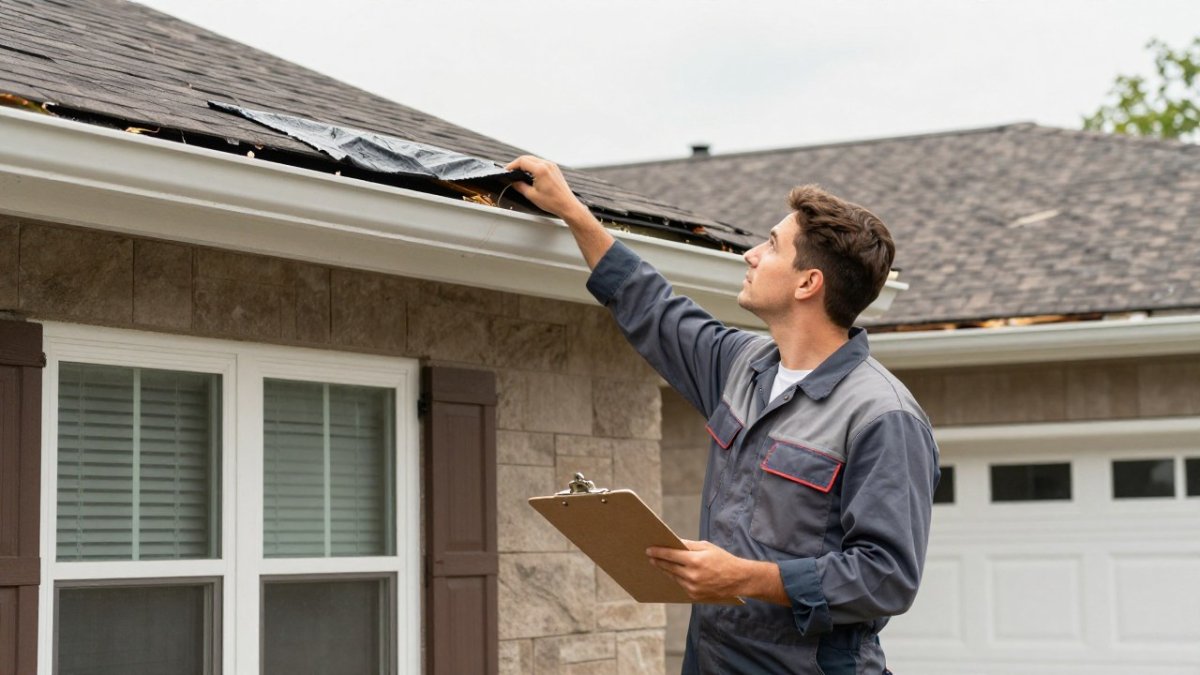
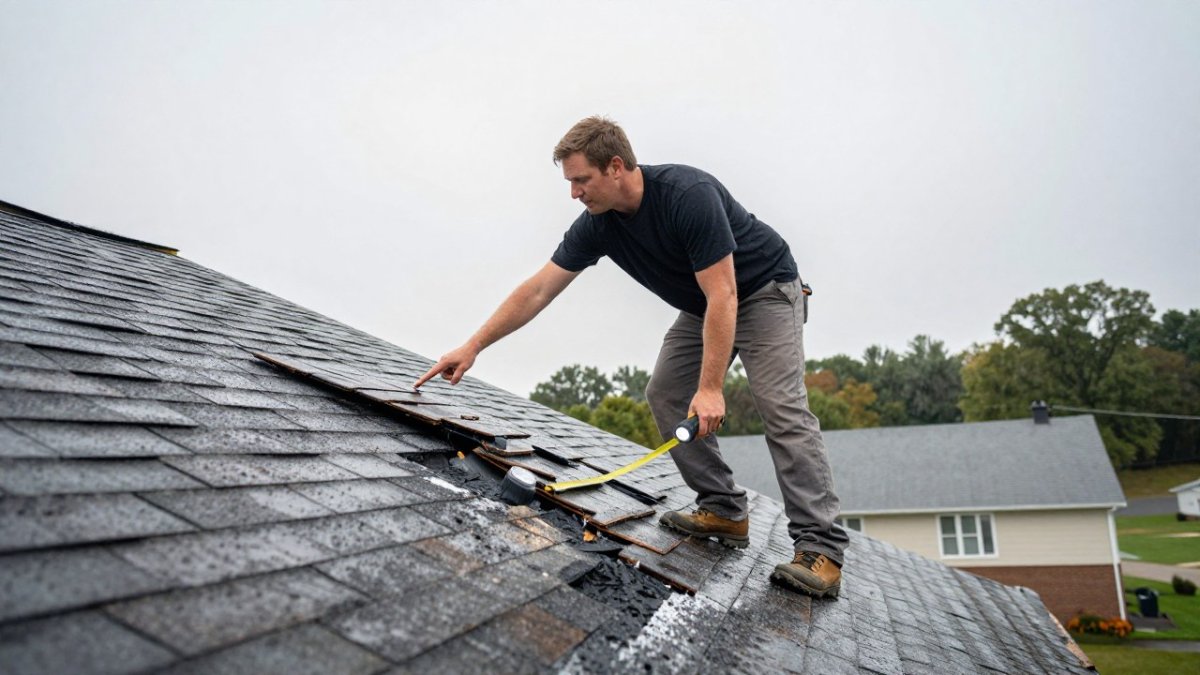
Once the area is safe, do a quick damage triage. Once you have filed, you can see how long each stage of the claim typically takes in what to expect at each stage.
- Look for missing shingles, dents in gutters, or bent vent covers
- Check ceilings and walls for new stains or drips
- Photograph each area with a date-stamped phone camera
- Place buckets under active leaks and move valuables away
Good triage makes every later step easier. Your roofer and your insurance company will both ask what you saw and when.
Where to Get Reliable Roofer Recommendations
The best roofer recommendations usually come from people who have seen the work up close. Start with neighbors who had roof repairs after a storm, and ask who showed up, how fast they came, and whether the job held up. Local supply yards and building inspectors also know which crews do steady work.
Be careful with unsolicited visitors. Many storm-chaser crews knock on doors within days of a storm, and they often pressure homeowners to sign on the spot. Rather than letting an uninvited roofer rush you into a contract, take time to verify their credentials and consider an independent assessment from DGK Home Solutions.
- Ask neighbors and coworkers who handled their repair
- Check local business reviews, looking for consistent feedback over time
- Ask your insurance company for its list of preferred or approved contractors
- Avoid anyone who demands a deposit or a signature before inspecting
A referral is a starting point, not a final answer. Verify every name you collect before you sign anything.
A Contractor-Vetting Checklist: Licensing, Insurance and Credentials
Use this checklist before you agree to any work. For guidance on picking a roofer suited to insurance repairs in particular, see choosing a roofing contractor for insurance repairs.
- State and local license. Licensing rules vary widely. Some states license roofers at the state level, some license general contractors only, and many cities require a separate local registration or business license. Look up the contractor on your state licensing board's website and confirm the license number, status, and expiration date. Ask for the name on the license and match it to the contract.
- General liability insurance. Request a certificate of insurance (COI) that names the insured business, the policy effective dates, and the coverage limits. Call the insurer's number on the certificate, not the number the roofer gives you, and confirm the policy is active. Ask whether the policy covers residential roofing and storm repair specifically.
- Workers' compensation coverage. Ask for proof of workers' comp and confirm it covers the crews who will be on your roof. If a worker is injured on your property and the contractor has no coverage, you can face liability. Verify the policy is active with the insurer.
- Local permit history. Ask whether they pull permits for roof replacements and repairs. Then check your city or county permit portal for the contractor's name and recent permits. A roofer who routinely skips permits is a risk, and unpermitted work can complicate insurance and resale.
- Manufacturer certification. Some shingle manufacturers certify installers, and certification can affect warranty eligibility. Ask for proof and confirm the certification is current on the manufacturer's website. Not every good roofer is certified, but a claim of certification should be verifiable.
- Physical business address. Confirm an actual office or shop, not only a phone number or a PO box. Look up the address and, if possible, drive by. A local address that matches the license and insurance records is a positive sign.
- References from recent jobs. Ask for at least two references from storm repairs completed in the past year, and call them. Ask how the crew handled surprises, whether the job passed inspection, and whether the final bill matched the estimate.
- Written contract and warranty terms. Ask to see a sample contract and the warranty documents before you commit. Confirm what the labor warranty covers, how long it lasts, and whether it transfers if you sell the home.
Watch out: A contractor who will not provide these documents, or who provides a certificate of insurance that lists a different business name than the contract, is a reason to walk away. A reputable roofer will expect these questions and answer them quickly.
The checklist below summarises what to request from a contractor and how to verify each item.
| Item | What to verify | Where to check |
|---|---|---|
| State and local license | License number, status and expiration date | State licensing board website |
| General liability insurance | Certificate of insurance and active policy | Call the insurer listed on the certificate |
| Workers' compensation | Coverage for crews on your roof | Confirm with the insurer |
| Permit history | Recent permits pulled under the contractor's name | City or county permit portal |
| Manufacturer certification | Current certification status | Manufacturer's website |
| Physical business address | Office or shop matching license and insurance records | Address lookup, drive-by if possible |
| Recent references | Two storm repair jobs from the past year | Phone calls to past clients |
| Written contract and warranty | Sample contract and warranty documents | Review before committing |
Red Flags When Hiring a Roofer, Including Storm-Chaser Tactics
Some warning signs show up again and again after a storm. Learn them before a crew knocks on your door.
- They approach you first, often door to door or from an unmarked truck
- They offer to waive your deductible or "handle the insurance" for you
- They pressure you to sign the same day
- They ask for a large upfront payment in cash
- They have no written estimate or contract
- They tell you the damage is worse than it looks, without showing evidence
Storm-chaser scams often rely on urgency. A legitimate roofer will give you time to get a second opinion. Waiving or rebating your deductible is restricted in many states, so an offer to do so is a serious warning.
Watch out: Never sign an insurance assignment or direction-to-pay form on the spot without reading every word. It can give the contractor control over your claim payments.
Questions to Ask a Roofing Contractor Before You Sign
Before you agree to any work, ask these questions and write down the answers:
- How long have you been doing storm repairs in this area?
- Who will supervise my job, and will they be on site?
- Will you pull the required permits, and who pays for them?
- What warranty do you offer on labor and materials?
- How do you handle supplements if the insurance estimate is too low?
- What is your timeline for starting and finishing the work?
- Can I see proof of your insurance and license today?
Clear answers matter more than a low price. Vague replies are a reason to keep looking.
Comparing Storm Damage Roof Repair Estimates and Contracts
Get at least three written estimates before you choose. A useful estimate is itemized, not a single lump sum. Ask each roofer to break out the same categories so you can compare apples to apples:
- Tear-off and disposal. Confirm whether the price includes removing the old roof, the number of layers, and dumpster or disposal fees. Your deductible also changes what you actually pay, so review roof insurance claim deductible options and how to estimate your out-of-pocket cost.
- Decking and underlayment. Ask what happens if rotten decking is found and how underlayment type and cost are specified.
- Materials. Compare shingle brand, product line, and color, plus ridge vent, flashing, and drip edge. A cheaper shingle line can explain a lower total.
- Labor and supervision. Confirm who supervises the job and whether the price includes a site supervisor.
- Permits. Ask who pulls the permit and whether the fee is included.
- Warranty. Compare labor warranty length and manufacturer warranty terms, and confirm whether registration is required.
- Payment schedule. A common pattern is a deposit, a progress payment, and a final payment after inspection. Be cautious with large upfront cash demands.
Compare the estimates line by line, not just by the bottom total. For a step-by-step method, see how to compare adjuster roofing estimates line by line.
Insurance scope and supplements. In a storm claim, your insurer's adjuster writes a scope of loss based on the inspection.
Watch out: Never sign an assignment of benefits or a direction-to-pay form on the spot. These can transfer control of your claim payments to the contractor.
Filing Your Claim: Deadlines and Your Next Step With a Roofer
Storm damage claims have deadlines, and they vary by state and by policy. Contact your insurance company as soon as possible after the storm, and ask for the claim filing deadline in writing. Many policies also require you to prevent further damage, so keep tarps and temporary repairs in place and save all receipts.
Share your photos, your damage notes, and your chosen roofer's written estimate with your adjuster. Ask your adjuster to explain what the policy covers before the inspection. You have the right to be present during the adjuster's visit and to ask questions about what they inspect.
Your next step with a roofer is to confirm the scope, sign only after you have read the contract, and keep every record.
Frequently Asked Questions
How long do you have to claim roof damage after a storm?
Deadlines are set by your homeowners insurance policy and state law, and they vary. Many policies require you to report a loss within a set period after the storm, and some states impose their own filing windows. Check your declarations page and policy language now, then call your insurer promptly. Keep dated photos of the damage and any temporary repairs. Waiting can jeopardize coverage, so report the loss as soon as you know it happened, even before a roofer finishes the full estimate.
Should you contact your insurance company or a roofer first?
Contact your insurance company first to open a claim and get a claim number, then schedule a roofer's inspection. Your insurer will assign an adjuster who needs to see the damage, so avoid any permanent repairs before that visit, though emergency tarping to prevent further water intrusion is generally expected. Ask the roofer to document the damage with photos and measurements you can share with the adjuster. A roofer who asks you to skip the insurer entirely is a red flag.
How can you tell whether a roofer is using high-pressure sales tactics?
Watch for door-to-door solicitation after a storm, pressure to sign the same day, offers to waive your insurance deductible, and claims that the roof must be replaced immediately. Legitimate contractors give you time to compare estimates and read the contract. Verify the company's physical address, state license and insurance before agreeing to anything. Many states restrict deductible waivers and require written contracts for insurance-funded work, so review your state's rules before you sign.
How do you verify a roofing contractor's license and insurance?
Look up the contractor's license number on your state licensing board's website, confirm it is active, and check for any complaints or disciplinary actions. Ask for a certificate of insurance showing general liability and workers' compensation coverage, and call the insurer to confirm the policy is current. Request the names of the policy holder and expiration dates in writing. Unlicensed or uninsured roofers can leave you liable for injuries on your property and may disappear if problems arise.

- roofer after storm damage
- how to find a roofer after storm damage
- red flags when hiring a roofer
- questions to ask a roofing contractor
- storm damage roof repair estimate