10 Roofing Supplement Tips That Get Missed Items Paid
By Editorial Team, Content Writer · October 27, 2026 · 12 min read

Last Updated: October 28, 2026
Quick Summary
A roofing supplement is a request to your insurer for extra money after the original adjuster estimate misses work your roof needs. Contractors file one when the estimate leaves out items that code, the manufacturer, or the job itself requires, backed by photos, measurements, and documentation.
- Reconcile the adjuster's squares, pitch, linear footage, and penetrations against your own measurements before anything else.
- Build a checklist with one row per line item, the correct quantity, the reason it is needed, and the evidence file.
- Cite the adopted building code edition and the exact shingle or underlayment manufacturer installation requirement.
- Label every photo and file with the item number it supports so the adjuster can approve line by line.
- If denied, request the rationale in writing and escalate with new evidence rather than resubmitting the same packet.
Table of Contents
- Reviewing the Adjuster Estimate Line by Line
- Roofing Supplement Documentation: Photos, Measurements, and Evidence
- Building Code, Manufacturer, and State Requirements to Cite
- Writing a Roofing Supplement Letter Template That Adjusters Read
- Roofing Supplement Estimate Examples: Before and After
- Choosing Roofing Supplement Software and Your Next Filing
- Frequently Asked Questions
A roofing supplement is a request to your insurer for extra money after the original adjuster estimate misses work your roof actually needs. Our organized documentation checklist helps you get photos, measurements, and estimates in order before you file.
The supplement doesn't replace the original claim. It adds to it. You're showing the insurer what the first estimate left out and backing each item with evidence.
When a supplement may be appropriate:
- Hidden damage shows up after tear-off, such as decking or underlayment damage.
- Code upgrades are required by the local building department.
- Manufacturer installation requirements call for items the estimate skipped.
File when you have identified and documented a gap.
Reviewing the Adjuster Estimate Line by Line
Don't skim the adjuster estimate. Read every line against your own measurements, your scope, and current pricing. A line-by-line reconciliation can help identify differences.
Reconcile Measurements Before You Touch Line Items
Start with the roof measurements. Compare the adjuster's square footage, pitch, and linear footage against your aerial report and your own field measurements. A small error in squares compounds across every line item that uses quantity.
Work through these checks in order:
- Squares. Does the adjuster's total match your measured area plus the waste factor? A 28-square roof billed as 26 squares has a quantity difference to review.
- Pitch. Is the correct pitch category applied? Check whether the estimate includes any applicable steep-slope charges.
- Linear footage. Are ridge, hip, valley, eave, and rake lengths included? Check whether the measurements for drip edge and ridge cap match the roof.
Write down every mismatch with the measured number and the adjuster's number side by side. That comparison becomes the backbone of your supplement.
Spotting Missing and Underpaid Line Items
Items to review can include starter strip, drip edge, ice and water barrier, underlayment, ridge cap, step flashing, and steep or high-roof charges. An underpaid item may have a line in the estimate but an incorrect amount.
Compare unit prices against your actual material and labor costs, not against a national average. Review whether the estimate's material and labor amounts match the job documentation and applicable requirements.
Keep a running checklist. For each missing or underpaid item, note three things:
- The line item and the quantity you believe is correct.
- The reason it's needed, code, manufacturer instructions, or physical measurement.
- The proof you'll attach, a code section, a manufacturer page, a photo, or an invoice.
A Worked Example of a Flagged Line
Suppose the adjuster estimate shows 26 squares of architectural shingles, no drip edge, and no ice and water barrier. Your field measurement shows 28 squares, 210 linear feet of eave and rake, and 120 linear feet of ice barrier at the eaves and valleys.
Your reconciliation notes would read:
- Shingles: adjuster 26 squares, measured 28 squares plus waste. Difference: 2 squares plus waste.
- Drip edge: adjuster 0 LF, measured 210 LF. Missing line item.
- Ice and water barrier: adjuster 0 LF, measured 120 LF. Missing line item; required by the adopted code edition and the shingle manufacturer's installation instructions.
Each of those rows becomes a numbered item in the supplement letter, with the supporting document named next to it. The supporting documents can help the adjuster review each item.
Check the Estimate's Own Math
Before you file, re-add the adjuster's quantities and extensions. Check for arithmetic errors, double-counted lines, and overhead and profit calculations that may need review. If overhead and profit is missing entirely on a job with a general contractor or multiple trades, flag it as a separate line with the reasoning stated plainly.
Our supplement tool cross-references the adjuster estimate against your measurement report and flags these gaps automatically, so you can see every line that doesn't match before you write the letter.
Roofing Supplement Documentation: Photos, Measurements, and Evidence
Documentation can support a supplement. Photos and measurements provide evidence for the items requested.
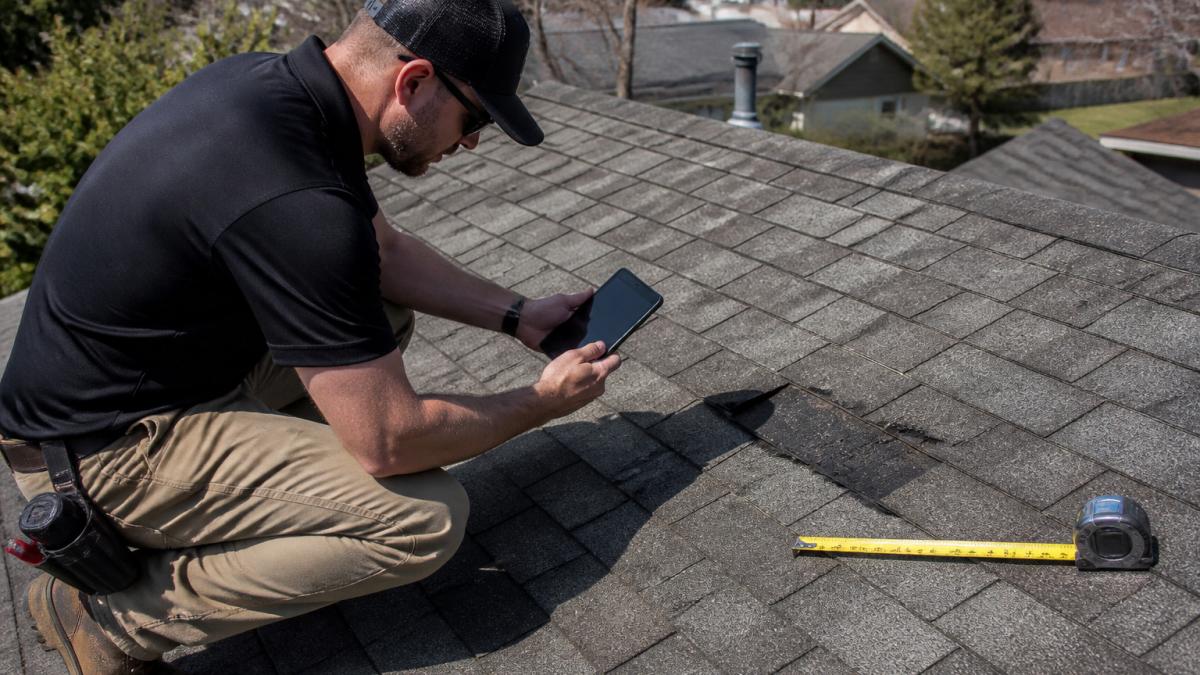
Build your evidence packet with these items:
- Dated photos of each damaged area, taken before tear-off
- Close-ups with a measuring tape or ruler in frame for scale
- Photos of the decking, underlayment, and flashing after tear-off
- Your aerial or field measurement report
Label every photo with the slope, location, and what it shows. Organize the file so the adjuster can find each item. Digital documentation with timestamps and clear labels can help organize the evidence.
Building Code, Manufacturer, and State Requirements to Cite
Cite the requirement and provide its source.
Three sources to pull from:
- Local building code. Find which edition of the International Residential Code your city or county has adopted. Our Mississippi roofing code requirements page covers the IRC edition and the drip edge, ice barrier, and underlayment rules. Ice barrier, drip edge, and underlayment rules often come from here.
- Manufacturer instructions. Quote the exact installation requirement for the shingle or underlayment being used. Attach the page.
- State rules. Some states set requirements for contractors, claim deadlines, and payment timing. Check your state's insurance department website before you file.
Watch out: state rules and deadlines vary, so confirm the current requirements for your state before filing. Don't rely on memory or a competitor's post.
Writing a Roofing Supplement Letter Template That Adjusters Read
Keep the letter factual and organized by line item, and treat it as the cover page for an evidence packet rather than a standalone argument. For a full walkthrough, see how to write a roofing supplement that gets approved.
The Letter Structure
Use this structure every time:
- Claim number, property address, and date of loss.
- A one-sentence summary of what you're requesting and the total amount.
- A numbered list of each item, with quantity, unit price, and extended total.
- For each item, the reason it's needed and the document that supports it.
- The total supplement amount and a request for a written response by a stated date.
Example line:
- Ice and water barrier, eaves and valleys, 120 LF at $X/LF. Required by the adopted code edition and the shingle manufacturer's installation instructions. See attached code section and manufacturer page.
Keep the tone professional. Avoid threats and avoid guessing at what the adjuster will say. State the fact, cite the source, and let the packet do the arguing.
The Submission Packet Checklist
A packet can organize the supporting documents. Build it in this order:
- Signed supplement letter with the numbered item list.
- Measurement report (aerial and field) with the squares, pitch, and linear footage highlighted.
- Dated photos of each damaged area, taken before tear-off.
- Close-ups with a tape or ruler in frame for scale.
Digital Documentation That Holds Up
Timestamps and labels can help organize documentation. Photograph each slope in a consistent sequence, label the slope and what the photo shows, and keep the original files rather than screenshots. If you use a measurement tool, export the report with the date and the property address visible. Organize the packet by item number, not by file type, so the adjuster reads it in the same order as the letter.
When the Supplement Is Denied or Partly Approved
If a supplement is denied or partly approved, consider these steps:
- Request the denial rationale in writing. Ask the adjuster to identify which line items were denied and why, missing documentation, a coverage position, or a pricing disagreement. You can't rebut a reason you can't see.
- Match the response to the reason. If the denial cites missing proof, supply the specific document. If it cites a coverage position, respond with the policy language and the code or manufacturer requirement that supports the item.
- Ask for a reinspection when the dispute is about physical conditions the adjuster hasn't seen, such as decking damage found after tear-off.
- Escalate within the carrier. Ask for the adjuster's supervisor or the claims manager, and put the request in writing.
- Use the state complaint process. Check your state regulator's website for information about complaint options and applicable timelines.
- Know when to bring in help. A licensed public adjuster or an attorney may make sense for large or repeatedly denied claims. Public-adjuster licensing and fee rules vary by state, so confirm the requirements before signing anything.
Track Outcomes to Improve the Next Filing
Log which items were approved, which were denied, and which reason was cited. Review the log to identify documentation gaps, then update the template as needed.
Roofing Supplement Estimate Examples: Before and After
Here's how a supplement changes the picture.
Before supplement (adjuster estimate):
| Line Item | Qty | Status |
|---|---|---|
| Architectural shingles | 28 squares | Included |
| Drip edge | 0 LF | Missing |
| Ice and water barrier | 0 LF | Missing |
| Permit fee | $0 | Missing |
After supplement (submitted with evidence):
| Line Item | Qty | Support |
|---|---|---|
| Drip edge | 210 LF | Local code, measurement report |
| Ice and water barrier | 120 LF | Code section, manufacturer page |
| Permit fee | Actual invoice | Building department receipt |
Each added line is paired with a supporting document.
Choosing Roofing Supplement Software and Your Next Filing
Supplement software can cross-check estimates against measurements, cite local building codes by jurisdiction, and draft supplements, adjuster replies, and material orders. ScopeProof offers these capabilities for roofing contractors. You can try your first claim free.
When you plan your next filing, reuse the checklist and template above. Track which items get approved and which get denied, then refine your evidence for the next job.
Frequently Asked Questions
What is a roofing insurance claim supplement?
A roofing insurance claim supplement is a request sent to the insurer after the initial adjuster estimate, asking for additional line items or higher pricing that the original scope missed. Supplements typically cover items like code-required upgrades, underlayment, flashing, drip edge, or additional labor that the first estimate did not include. Each request should be backed by photos, measurements, and cited requirements such as manufacturer installation instructions or local building code sections. Clear documentation supports the requested changes.
How do you write a roofing supplement?
Start by comparing the adjuster estimate against your own measurement report and scope of work, and list every item that is missing or underpriced. For each item, note the reason it is needed, attach supporting evidence, and reference the applicable code or manufacturer requirement. Present the requested changes in a clear, itemized supplement estimate with a short cover letter. Keep the tone factual and direct so the adjuster can verify each line quickly.
What documents should be included with a roofing supplement?
A complete roofing supplement packet usually includes a cover letter, your supplemental estimate, the original adjuster estimate for reference, roof measurement report, dated photos of the damage and affected areas, and copies of any cited manufacturer or building code requirements. If a permit or inspection report exists, include it as well. Label each attachment so the adjuster can match every requested item to its supporting evidence.
How should a contractor respond when an adjuster denies a supplement?
Ask the adjuster for the specific reason in writing, then compare that reason against your documentation. If the denial was based on missing evidence, add photos, code citations, or manufacturer requirements and resubmit. If the disagreement is about coverage or policy language, review the relevant policy language and the insurer's response. Keep all communication in writing and document each response to maintain a clear record.

- roofing supplement
- roofing insurance claim supplement tips
- roofing supplement documentation
- roofing supplement letter template
- roofing supplement estimate examples